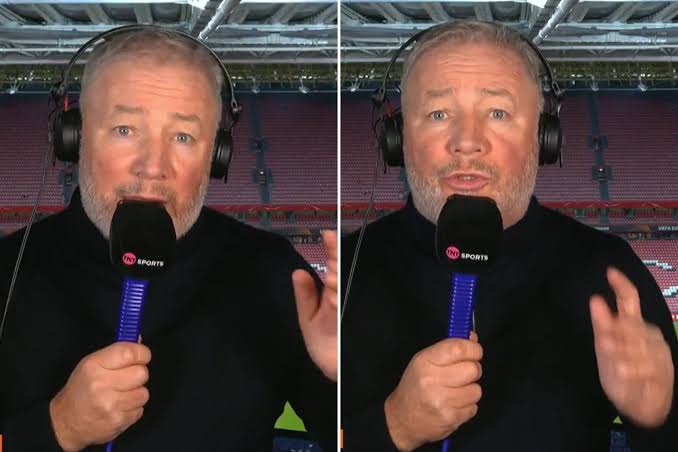
Ally McCoist Stands Firm on Celtic Penalty Fury as He Claims Modern Handball Rules Are Ruining Football
Ally McCoist has refused to back down from his criticism of the late Celtic penalty decision at Ibrox, insisting the current handball law is damaging the game after Rangers were punished in the closing stages of the Glasgow derby.
The controversy came when Dujon Sterling was adjudged to have handled the ball inside the box, allowing Celtic to convert from the spot and secure a dramatic draw. The decision sparked immediate debate, with opinions split across pundits and supporters.
Former referee Chris Foy publicly disagreed with McCoist’s stance, explaining that after reviewing the footage several times, he believed the referee was correct to award the penalty under the current interpretation of the rules.
However, two days later, the Rangers legend remained visibly frustrated during his appearance on talkSPORT, where he renewed his call for football’s lawmakers to reconsider the wording of the handball law.McCoist Calls for Intentional Handball to Be Reintroduced
Speaking live on air alongside Gabby Agbonlahor, McCoist admitted that while Celtic deserved their point based on second half performance, he could not accept the decision that led to it.
He questioned what Sterling was realistically supposed to do in that situation, arguing that the defender’s arm position was natural given he was attempting to play football and had no time to react to the ball striking him.
McCoist stressed that the defender had no awareness of the ball making contact with his arm and insisted that common sense is disappearing from officiating decisions.Agbonlahor echoed the frustration, stating that football was easier to understand when deliberate handball was the defining factor. Both agreed that the word intentional should be reinstated within the law.According to McCoist, penalties of this nature are becoming too frequent and are changing the spirit of the sport. He argued that decisions like the one at Ibrox are stripping emotion and fairness from key moments.What the Rules Actually Say
Despite the emotional reaction, the current laws appear to support the referee’s call.
Under IFAB Law 12, a handball offence is committed if a player touches the ball with their hand or arm when it has made their body unnaturally bigger. A player is considered to have made their body unnaturally bigger when the position of the arm is not justifiable by the player’s body movement for that specific situation.
This wording removes the need for intent, focusing instead on arm position and body shape at the moment of contact.That interpretation has been consistently applied across top level football, which is why refereeing analysts have largely defended the decision made during the derby.Debate Shows No Sign of Fading
The incident has once again highlighted the ongoing divide between traditional views of the game and modern rule enforcement. While lawmakers prioritise clarity and consistency, many former players believe something has been lost in the process.For Rangers supporters, the frustration centres on the belief that Sterling had no time to react and gained no unfair advantage. For Celtic fans, the focus remains on the letter of the law and the defender’s arm position.
What is certain is that the debate over handball interpretation is far from over. McCoist’s comments have added fresh fuel to an argument that continues to split pundits, players and supporters alike.
As long as the current wording remains in place, decisions like the one at Ibrox are likely to continue provoking strong reactions across Scottish football.