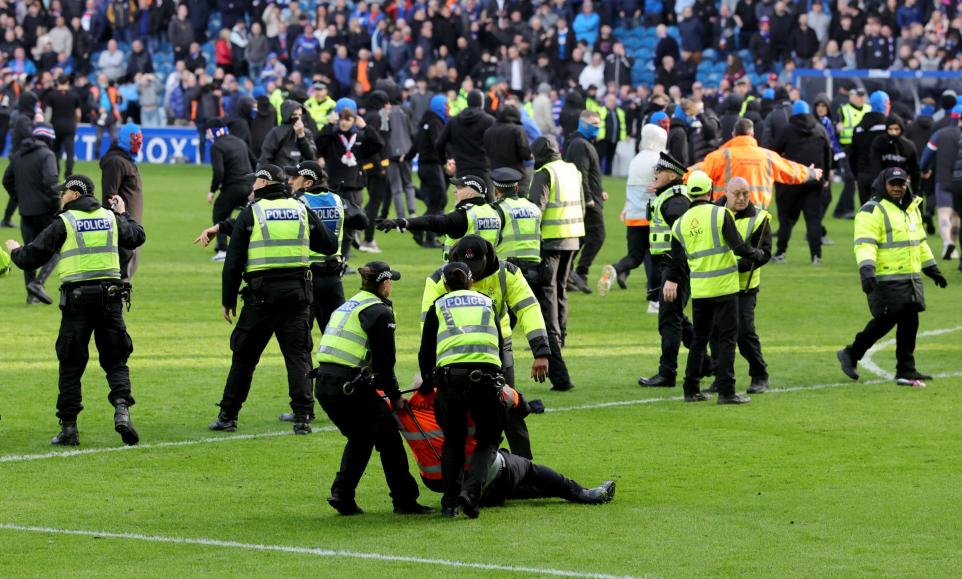
Following the disgraceful scenes that unfolded at Ibrox on Sunday — widely condemned after reports of fans clashing and shocking acts of vandalism — the time has come for the Scottish football authorities to show real leadership and take decisive action.
The incidents described in Herald Sport on March 9, where police openly condemned the shameful behaviour surrounding the match, cannot simply be brushed aside as yet another heated chapter in the fierce rivalry between Rangers and Celtic.
What happened went far beyond passion or rivalry; it crossed the line into unacceptable conduct that has once again brought embarrassment and unwanted attention to Scottish football.
For too long, authorities have responded to incidents like this with mild punishments, warnings, or statements promising investigations. But if the Scottish Football Association truly wants to demonstrate that it will not tolerate violence, vandalism, and disorder from supporters, then it must act firmly and without hesitation.
There is a simple and powerful step the SFA could take if it is genuinely willing to show the strength of leadership the game desperately needs.
The match should be declared void, and both Rangers and Celtic should be disqualified from the competition entirely as a direct consequence of the appalling behaviour and criminal vandalism carried out by sections of their supporters.
Such a decision would send an unmistakable message across Scottish football: that no club, regardless of its size, influence, or history, is above the rules of the game. It would also underline that the reputation and safety of the sport must always come before commercial interests or rivalries.
To maintain fairness within the tournament structure, the SFA could then conduct a random draw between the remaining semi-finalists, with one team receiving a bye directly to the final.
This would allow the competition to continue while clearly demonstrating that unacceptable behaviour from fans will have serious consequences.
Scottish football has reached a point where strong action is no longer optional — it is necessary. If the governing bodies truly want to protect the integrity of the sport, they must prove they are willing to act decisively when situations like this arise.
The events at Ibrox should not simply be remembered as another ugly incident in a long-running rivalry.
Instead, they should serve as the moment when the authorities finally chose to draw a clear line and defend the reputation of Scottish football.