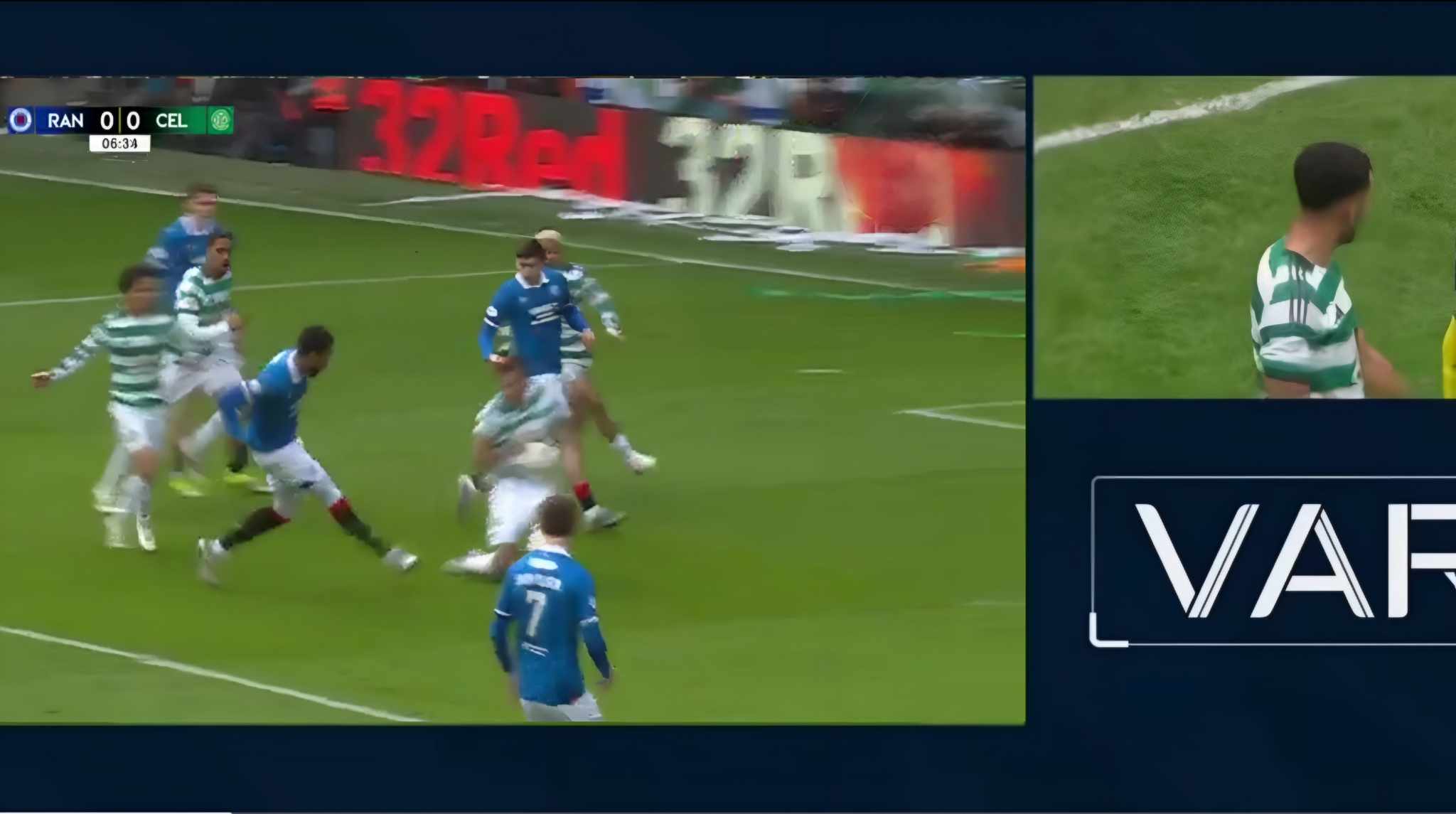
VAR referee Andrew Dallas has explained why Rangers were not awarded a penalty against Celtic despite strong appeals for handball against Auston Trusty inside the box during their Scottish Cup clash at Ibrox.
The incident occurred in the first half when Rangers striker Youssef Chermiti fired a shot toward goal that struck Trusty as the defender attempted to block the effort. Rangers players immediately appealed for a penalty, claiming the ball had hit the Celtic defender’s arm inside the 18-yard area.From the initial viewing, several observers believed the referee might point to the spot. Trusty appeared to slide in with one arm extended while trying to stop the shot, which prompted loud appeals from the home side and the crowd at Ibrox.
However, referee Don Robertson allowed play to continue, and after a quick check with VAR official Andrew Dallas, the decision was upheld with no penalty awarded.
The key reason behind the call was the position of Trusty’s arm when the ball made contact. Replays showed that the ball struck the defender’s right arm, which was tucked close to his body rather than extended away from it.According to the interpretation of the handball rule, a player is generally not penalised if the arm is in a natural position and close to the body when the ball makes contact. Because Trusty’s arm was not considered to be making his body unnaturally bigger, the VAR team concluded that the incident did not meet the threshold for a penalty.
Had the ball struck his other arm, which appeared to be further away from his body as he slid across to block the shot, the outcome may have been different. But with the contact occurring on the arm that was tucked in, the officials determined there was no infringement.
The decision proved to be a major talking point during the match, with Rangers supporters convinced their side should have been awarded a spot-kick. Nevertheless, the officials stood by the call after reviewing the footage.
In the end, the VAR explanation centred on a simple principle within the handball law: if a player’s arm is close to their body and not making their silhouette bigger, the contact is usually not considered a punishable offence.