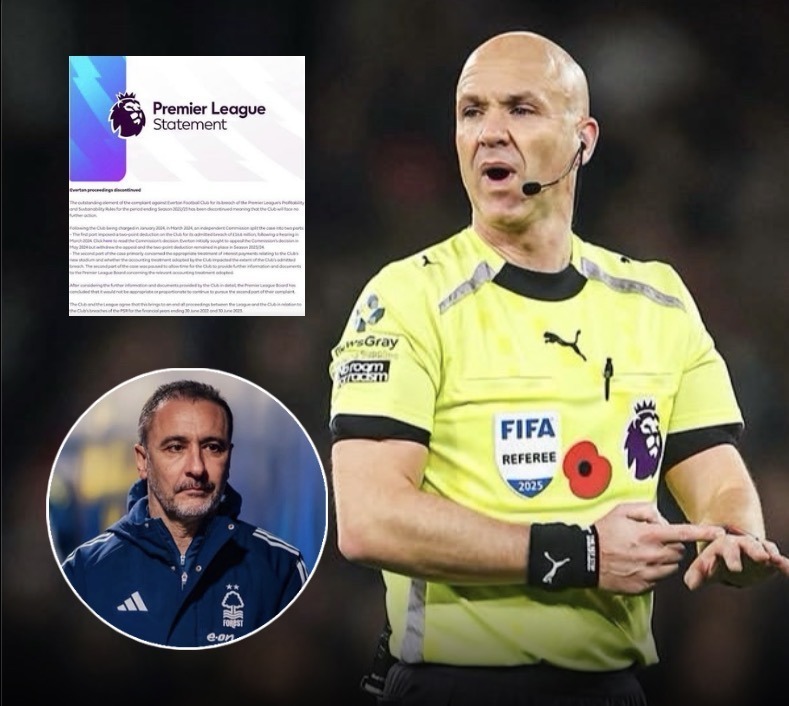
A major controversy has erupted in English football following confirmation from authorities that the match official involved in the recent clash between Nottingham Forest and Liverpool will no longer oversee fixtures involving four specific top-flight sides.
The decision, outlined in an official statement, has sent shockwaves across the Premier League, intensifying debate around refereeing standards, accountability, and transparency in the modern game.
The governing body, The Football Association, confirmed that the move was made following a comprehensive review of the circumstances surrounding the highly contentious match. The fixture itself was already under scrutiny after several flashpoint decisions led to protests from players, coaching staff, and supporters, with many questioning how key moments were adjudicated.According to the statement, the decision to restrict the official from taking charge of matches involving the unnamed quartet of clubs is not being described as a disciplinary “ban” in the strictest sense, but rather as an operational measure designed to “preserve competitive integrity and reduce the risk of further controversy.” Despite that clarification, the language used — particularly the assertion that the referee “will not be appointed to those fixtures moving forward” — has fueled widespread interpretation that this is effectively a ban in all but name.
The review process was conducted in collaboration with Professional Game Match Officials Limited, the body responsible for managing referees in English professional football. Sources close to the process indicate that officials analyzed match footage, VAR communication logs, and post-match reports before arriving at the conclusion that a change in appointment protocol was necessary.The original match between Forest and Liverpool had already become one of the most talked-about games of the season. Several decisions — including a pivotal moment that influenced the outcome — triggered an immediate backlash. Nottingham Forest expressed concern soon after the final whistle, while Liverpool’s involvement in the fixture ensured the incident drew national and international attention.
In the days that followed, the debate escalated beyond the two clubs involved. Former players, pundits, and refereeing analysts weighed in, many calling for clearer explanations of how decisions are reached, especially in the era of VAR. The situation exposed what critics say is an ongoing tension between the need for human judgment and the expectation of technological precision.The FA’s statement stopped short of admitting fault but acknowledged “the importance of maintaining confidence in officiating among clubs, players, and supporters.” That phrasing has been interpreted as an attempt to balance institutional backing of referees with recognition of the growing demand for accountability.
For Nottingham Forest supporters, the development has been viewed as partial vindication after days of vocal frustration. Many fans had argued that the decisions in the match unfairly influenced the result and called for stronger oversight of officiating appointments. While the authorities have not overturned the match outcome, this latest move signals that concerns raised in the aftermath were taken seriously enough to warrant structural adjustments.
Liverpool, meanwhile, have remained relatively measured in their response. The club has avoided public escalation, focusing instead on upcoming fixtures. However, the broader implications of the ruling affect not just the two teams involved but the league’s approach to managing high-pressure officiating environments.This situation also raises important questions about how referees are protected and evaluated. Match officials operate under intense scrutiny, and decisions like this may set a precedent for how governing bodies respond when confidence in officiating is shaken. Some experts believe limiting certain appointments could become a more common solution — a middle ground between disciplinary action and full exoneration.
Others worry it may create unintended consequences. If certain referees are quietly removed from particular fixtures, critics argue it could lead to speculation, reputational damage, and a lack of clarity about performance standards. Transparency, they say, will be key to ensuring such measures are understood as procedural rather than punitive.
The Premier League has grown into one of the most watched sporting competitions in the world, where every decision is dissected across multiple camera angles and discussed instantly on social media. In that environment, even marginal calls can escalate into major controversies, placing referees under unprecedented pressure.Ultimately, this episode underscores a central challenge facing modern football: balancing fairness, transparency, and the human element of refereeing in a game increasingly defined by microscopic analysis. Whether this decision restores confidence or deepens skepticism will depend on how consistently the league applies its standards in the weeks and months ahead.
One thing is certain — the fallout from Nottingham Forest vs Liverpool will not fade quickly, and the conversation around officiating in English football has entered yet another intense chapter.